Local business marketing: a complete guide for 2026
Local business marketing has moved far beyond simply listing a phone number in a directory. In 2026, it's a complex ecosystem of technical precision, community trust, and algorithmic authority.
To dominate a local market, businesses must move past passive visibility and actively engineer the decision-making process of their potential clients. This guide provides a structured, data-driven roadmap to securing market share, focusing on the specific mechanics that convert local searchers into paying customers.
Understanding what local business marketing really means in 2026
Local business marketing is no longer just about geography. It's about intent and immediacy. In 2026, the definition has shifted from "being found" to "being the obvious choice." It involves a strategic combination of search engine optimization, reputation management, and paid acquisition designed to capture high-intent traffic within a specific radius.
The core of modern local marketing lies in understanding the "near me" user behavior. Data indicates that over 46% of all Google searches have local intent. However, simply appearing in these searches is insufficient. The goal is to dominate the "Local Pack," the map-based results that appear at the top of the SERP (Search Engine Results Page).
Effective strategy now requires a shift in mindset:
From traffic to conversion: Vanity metrics like "views" are irrelevant if they don't drive calls or foot traffic.
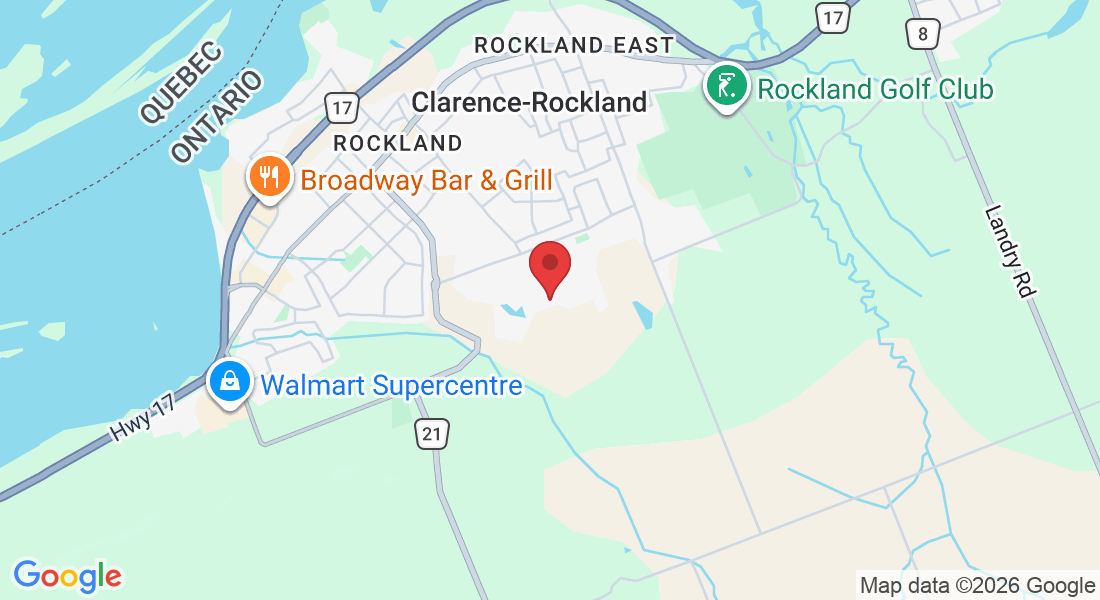
From general to hyperlocal: Targeting "Ontario" is wasteful; targeting specific neighborhoods in Clarence-Rockland or Ottawa yields higher ROI.
From passive to proactive: Waiting for reviews is a failing strategy; systems must be in place to extract them.
We see too many businesses wasting budget on broad campaigns that fail to address the specific friction points of local buyers. A successful strategy aligns your digital footprint with the exact moment a customer decides they need a solution.
Building your foundational online presence
Before spending a dollar on ads, you must make sure your digital infrastructure can support and convert traffic. At EdenOS, we focus on structured digital foundations as the non-negotiable first step in any successful local marketing initiative. Without them, traffic simply leaks out of the funnel.
Setting up your Google Business Profile the right way
Your Google Business Profile (GBP) is arguably more critical than your homepage for local discovery. It's the primary interface between your business and local customers on Google Maps and Search. A fully optimized profile can receive up to 7x more clicks than an incomplete one.
To maximize your GBP impact, follow these technical specifications:
Category precision: Select a primary category that exactly matches your core service (e.g., "HVAC Contractor" rather than just "Contractor"). Use secondary categories to cover auxiliary services.
N.A.P. consistency: Your Name, Address, and Phone number must match your website and legal filings exactly. Even minor discrepancies (e.g., "St." vs. "Street") can dilute algorithmic trust.
Visual density: Upload at least 10 high-quality photos initially, including exterior, interior, team, and work-in-progress shots. Profiles with photos receive 42% more requests for driving directions.
Attribute utilization: Check all relevant attributes (e.g., "Wheelchair accessible," "Veteran-led") as these function as secondary keywords.
Getting listed in local directories and building a website that works
While Google is dominant, citation consistency across the web validates your existence to search engines. You must secure listings on high-authority directories like Yelp, Yellow Pages, and industry-specific platforms (e.g., TripAdvisor for hospitality, Houzz for construction). The key metric here is consistency. Data aggregators feed search engines, and conflicting data creates trust issues for algorithms.
However, a directory listing is a signpost, not a destination. Your website is where the transaction happens. In 2026, a local business website must meet three non-negotiable criteria:
Speed: It must load in under 2.5 seconds (Core Web Vitals threshold).
Mobile-first: It must be designed for thumbs, not mouse clicks.
Conversion-centric: It needs clear calls-to-action (CTAs) above the fold.
Traditional agencies often drag this process out for months, leaving businesses in a holding pattern. EdenOS's 7-day website builds eliminate traditional delays, allowing businesses to establish a professional online presence and start capturing market share immediately.
Mastering local SEO for organic visibility
Local SEO (Search Engine Optimization) is the process of optimizing your online presence to attract more business from relevant local searches. Unlike general SEO, which focuses on global reach, local SEO prioritizes proximity, relevance, and prominence.
Strategic local keyword research that actually drives customers
Effective keyword research for local businesses focuses on transactional intent rather than informational volume. Ranking for "how to fix a leak" (informational) is less valuable than ranking for "emergency plumber Clarence-Rockland" (transactional).
You must identify keywords that signal a readiness to buy. We categorize these into three tiers:
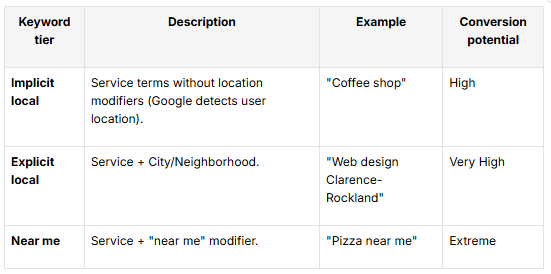
Your strategy should target the "Explicit Local" tier in your static content (H1 headers, title tags) while optimizing for "Implicit Local" and "Near Me" through schema markup and Google Business Profile signals. Avoid keyword stuffing. Instead, focus on semantic relevance, using terms that naturally occur in your industry (e.g., a mechanic using "brake pads," "oil change," and "diagnostics" in the same context).
On-page optimization, technical fixes, and voice search readiness
On-page optimization involves aligning your website's code and content with local search algorithms. The most critical technical element for 2026 is Schema Markup (specifically JSON-LD).
You must implement LocalBusiness schema on your homepage. This code speaks directly to search engines, explicitly defining your:
Geo-coordinates (Latitude/Longitude)
Price Range
Opening Hours
Service Area
Voice search readiness: With the rise of smart speakers and mobile assistants, voice queries now account for over 20% of mobile searches. These queries are conversational and longer. To capture this traffic:
Create FAQ pages: Structure content in a Question/Answer format.
Use natural language: Write as people speak. Instead of "Auto Repair Services," use phrases like "Where can I get my car fixed in Rockland?"
Optimize for speed: Voice assistants favor pages that load instantly. Your Time to First Byte (TTFB) should be under 200ms.
Engaging your community through content, social media, and reputation
Engagement is the mechanism that turns visibility into loyalty. For local businesses, this means proving you are an active participant in the community trust, not just a faceless entity.
Creating content that connects with local customers
Generic blog posts about "industry trends" rarely perform well for local businesses. Instead, your content strategy should be hyper-localized. This signals to Google that you are relevant to the specific area.
Effective local content types include:
Local guides: "The Best Wedding Venues in Clarence-Rockland" (for a photographer or florist).
Project showcases: Detailed case studies of work done in specific neighborhoods. Mentioning landmarks and street names helps reinforce local relevance.
Community news: Commentary on local events or regulations that affect your industry (e.g., a real estate agent discussing new zoning bylaws).
This approach serves a dual purpose: it provides genuine value to your audience and creates a dense network of local semantic signals for search engines.
Building a social media presence that matters locally
Social media for local business is not about going viral globally. It's about dominating the feed in your specific radius. Platforms like Facebook and Instagram allow for precise geographic targeting, but organic reach requires community integration.
Tactical execution includes:
Geotagging: Every post must have a location tag.
Local hashtags: Use tags with lower volume but higher local relevance (e.g., #ClarenceRockland vs. #Ontario).
Group participation: Actively participating in local community Facebook groups, not just spamming ads, but answering questions and offering advice.
Managing reviews and earning customer trust that sticks
Reviews are the currency of trust. A study by BrightLocal shows that 76% of consumers trust online reviews as much as personal recommendations. Furthermore, review quantity and velocity (how often new reviews come in) are top ranking factors for the Google Local Pack.
You need a proactive system to generate reviews. Do not leave it to chance.
The ask: Request a review immediately after service delivery when satisfaction is highest.
The response: Reply to every review, positive or negative, within 24 hours. This demonstrates active management.
The platform: Prioritize Google first, then Facebook or industry-specific sites.
Many business owners hesitate to ask for reviews or share their site because they're embarrassed by their current digital presence. EdenOS's no-fluff process helps businesses avoid that hesitation, giving them a platform they're proud to direct happy customers to right away.
Driving growth with targeted local advertising and community ties
Organic growth is sustainable, but paid advertising provides immediate velocity. When combined with strong community ties, it creates a formidable barrier to entry for competitors.
Running hyperlocal ad campaigns that deliver results
Local advertising allows you to bypass the wait for SEO rankings. In 2026, the most effective tools for local businesses are Local Services Ads (LSAs) and Geofencing.
Local Services Ads: These appear above standard Google Ads and the Map Pack. They operate on a pay-per-lead model rather than pay-per-click, meaning you only pay for qualified calls. You must pass Google's screening process to earn the "Google Guaranteed" badge, which significantly increases click-through rates.
Geofencing: This technology allows you to target users within a specific physical boundary, down to a single building. For example, a personal injury lawyer can target ads to mobile devices that have entered a local hospital or auto repair shop.
Radius targeting: On Facebook and Google Ads, set strict radius limits (e.g., +10km from your store). Exclude locations where you cannot service clients profitably to prevent budget wastage.
Getting involved in your community and building partnerships that work
Digital marketing should amplify real-world relationships, not replace them. Strategic partnerships with complementary businesses can double your reach without doubling your budget.
Partnership framework:
Identify complementary services: A realtor partners with a moving company; a gym partners with a health food store.
Cross-promotion: Exchange guest blog posts, co-host local events, or offer bundled discounts.
Backlink exchange: A link from a legitimate local business website is a powerful signal of local authority to Google.
At EdenOS, we practice what we preach. We actively partner with Clarence-Rockland businesses who value local market understanding, creating a network of professionals who support each other's growth and refer high-quality leads within the community.
Measuring what works and refining your local marketing approach
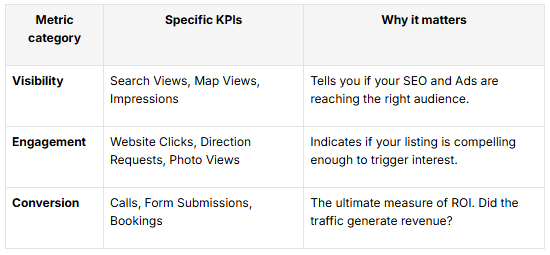
You cannot improve what you do not measure. To make sure your local marketing approach is profitable, you must track specific Key Performance Indicators (KPIs) using tools like Google Analytics 4 (GA4) and Google Business Profile Insights.
Focus on these three metric categories:
Call tracking: Implement dynamic number insertion (DNI) to track exactly which channels (Organic, Paid, Social) are driving phone calls. UTM parameters: Use UTM tags on your Google Business Profile links to separate GBP traffic from general organic traffic in your analytics.
Review these metrics monthly. If visibility is high but conversion is low, your offer or website experience is likely the bottleneck. If conversion is high but visibility is low, you need to increase ad spend or content output.
What comes next for your local business marketing
As we look beyond 2026, local marketing is moving toward hyper-personalization and AI-driven automation. Artificial Intelligence will play a larger role in how search engines understand and rank local content. We expect to see "Zero-Click" searches increase, where Google provides the answer (phone number, hours, price) without the user ever visiting your website.
This makes your off-site signals, your GBP, your reviews, and your directory listings, even more critical. Additionally, visual search is gaining traction. Users are increasingly searching by snapping photos of products or storefronts. High-resolution images with proper tagging will be essential for future-proofing your business.
Frequently asked questions
How can I promote my business locally?
To promote your business locally, combine a verified Google Business Profile with targeted Local Services Ads for immediate visibility. Simultaneously, build organic trust by gathering consistent customer reviews and engaging in local community groups on social media.
What is local marketing with examples?
Local marketing targets customers within a specific geographic radius of your business. Examples include a restaurant using geofencing ads to target people within 2km during lunch hours, or a plumber optimizing their website for keywords like "emergency drain repair Clarence-Rockland."
What is the 70 20 10 rule of marketing?
The 70-20-10 rule suggests allocating 70% of your budget to proven, safe strategies (like SEO and Google Ads), 20% to emerging channels that show promise (like new social platforms), and 10% to experimental, high-risk/high-reward tactics.
How much should I budget for local marketing?
Most small-to-medium local businesses should allocate between 5% to 10% of their gross revenue to marketing. For a business doing $500k in revenue, this means a budget of $25k to $50k annually, split between ad spend, software tools, and professional services.